
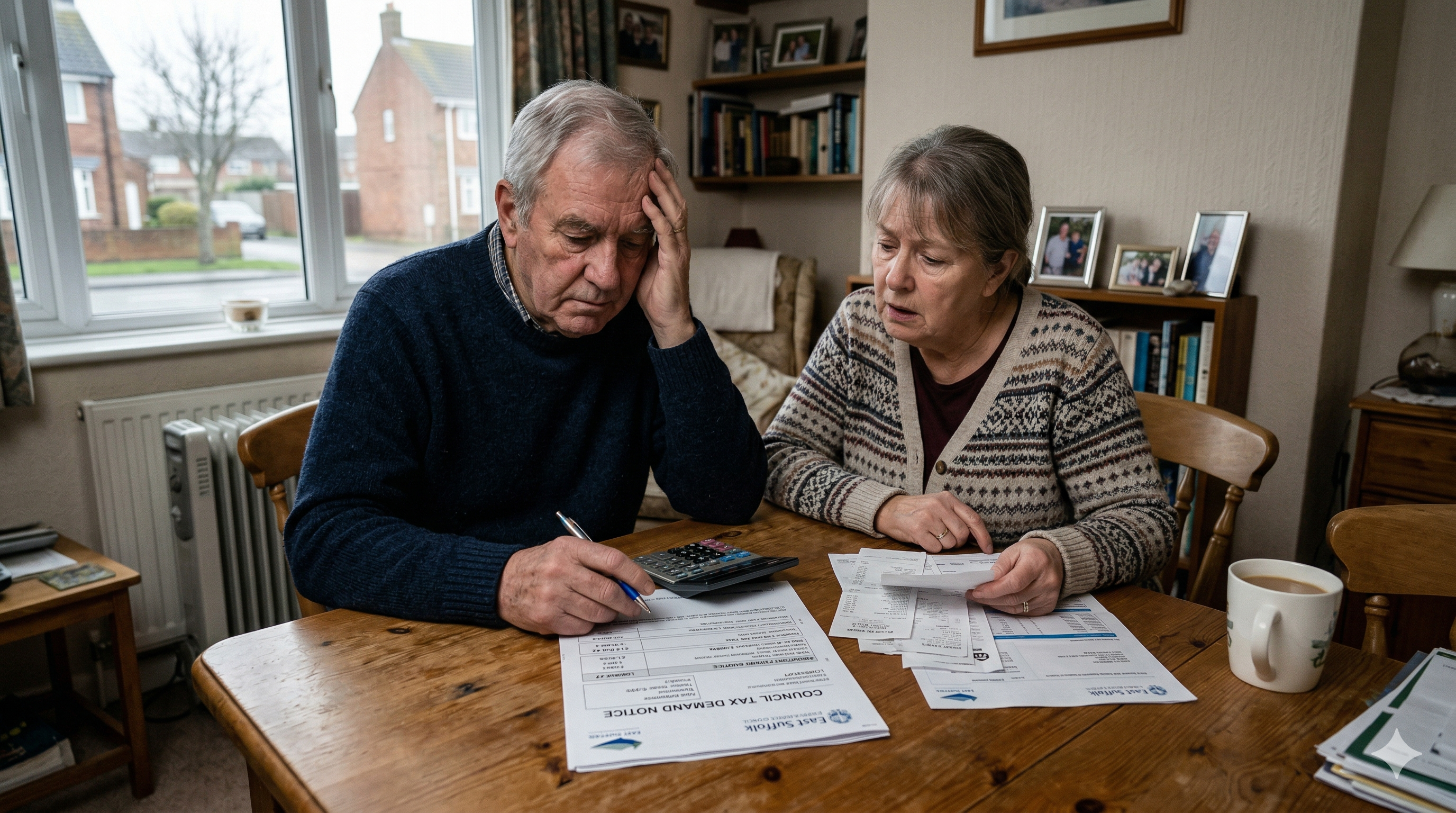
We all knew it was coming, but that doesn’t make it any easier to see the new council tax bill land on the doormat. Starting from April, most of us in Lowestoft will be paying more. The question everyone’s asking over the garden fence or at the school gate is, “How much more, and what do we get for it?”
Let’s start with the facts. The average Band D council tax in East Suffolk is jumping by 4.99%, which is about £111 extra this year, bringing the typical bill up to £2,392 for 2026-27. That figure rolls together the different slices of the council tax pie: Suffolk County Council, East Suffolk Council, the Police and Crime Commissioner, and, for us in town, the Lowestoft Town Council precept too.
It’s not just a big number on a bit of paper. Many of us are feeling the pinch. People are openly frustrated by the size of the rise. One social media post in a local group summed up the mood: “Just received our council tax bill for 2026-2027. How can the Lowestoft Town Council justify a 9.9 per cent rise in their part of the bill?”. Others are even sharper, with another group member calling a previous year’s increase “disgusting” and questioning why the percentage keeps jumping.
It’s not just about the numbers for a lot of locals. Some are connecting the rise to issues they see every day, like litter, kittiwake poo on the high street, pot holes and graffiti. There’s a real sense online that people want more transparency and justification for the increases. The phrase “How can the council justify this?” keeps popping up, and it’s clear that for many, it’s not just about paying a few pounds more, but wanting to see a genuine return in the form of cleaner streets and better local services.
You’ll hear more grumbling than usual at the tills in Aldi or down at the chippy, with one neighbour saying, “It’s the highest increase I’ve seen since I moved here, and wages just aren’t keeping up.” For a Band D property, the Town Council’s bit alone is now £199.17 a year. The County Council’s share is also up 4.99%.
Why is it going up? The official line is that services cost more to run. Adult social care in Suffolk is swallowing an ever bigger chunk, and the County Council’s budget gap is yawning wider every year. There’s also pressure to keep things like libraries, waste collection, and roads running smoothly, after years of tightening belts. The Town Council has put its rise down to “protecting local services and community projects,” but for most of us, it’s still a sting, especially after last year’s rise.
So what are we actually getting? The County and District say the extra money keeps the basics going such as bins emptied, streets lit, parks open, and support for the most vulnerable. The Town Council says their budget will help with things like maintaining local play areas, supporting community events, and looking after heritage buildings. Some people say they value those things, but there’s a strong feeling that every year, the bill goes up and the services don’t always feel better.
There’s also plenty of worry about how the rise will hit those already struggling. Official data shows council tax has risen by 22% since 2023 in some poorer areas. Pensioners and those on fixed incomes are especially anxious. “We can’t cut back any more,” one local posted, “and I’m having to choose between heating and council tax again this winter.”
To be fair, a few folks have pointed out that Lowestoft’s bill is still a little lower than some other parts of England, but that’s not much comfort if you’re already stretched. And while some appreciate the work being done to keep the High Street alive or improve the parks, many want to see clearer results for their money.
If you’re on a low income or struggling to pay, there are some council tax reduction schemes out there, but the paperwork isn’t always easy, and not everyone knows what help they can get.
So, what’s the mood in Lowestoft right now? A bit fed up, a bit worried, and a lot sceptical about whether anyone in County Hall is really listening. We all want good services, but we’d like to see a bit more give and take for the money we’re handing over. If there’s one thing we can agree on, it’s that council tax bills are now firmly part of the “cost of living” conversation in every household round here.