
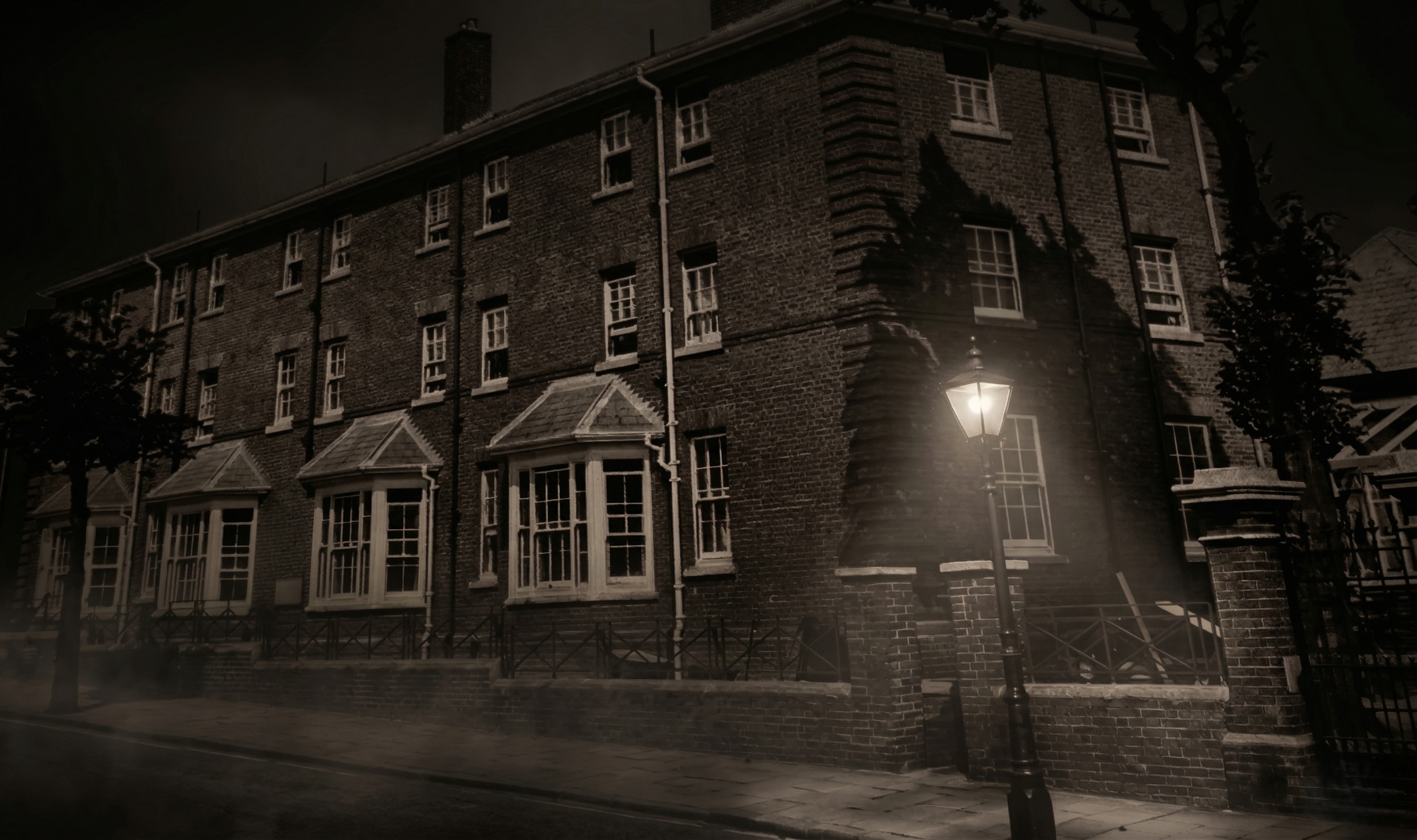
When I took the night shift at the old Lowestoft Hospital, I figured the worst I’d have to deal with would be bored teenagers trying doors. They told me the place was half-empty, just a patchwork of dusty Victorian corridors and some new offices for the charity shops. The Re-Utilise people on the ground floor were friendly enough, if a bit cagey when I asked about the hospital’s history. “It gets heavy at night,” one of them said and left it at that. I laughed it off, but I wish I hadn’t.
The building itself always felt wrong after dark. Too quiet. My route took me from the old War Memorial Wing on Alexandra Road, past the boarded-up wards, and through a maze of halls that looked the same even after months. The motion lights were supposed to make it easier, but they had the opposite effect a harsh, sudden glare that left you blinking in a tunnel of shadow.
I’d heard about the 1662 witch trials in town, but I hadn’t realized just how close I was working to the site where Amy Denny and Rose Cullender were hanged. I didn’t care much about history, but the stories got under my skin. There was talk that, during the old hospital expansions, builders had found a body buried face down one of those old superstitions to keep the dead from coming back. They said it was right under the foundation, below what used to be the nurse’s station. I walked past it every night.
It was a Tuesday when things started to turn. I’d just finished the handover with the day guard, who always insisted on doing the last check in pairs. He joked about moving chairs and cold spots, but he did it with a stiff jaw and wouldn’t meet my eye. Just before midnight, I was back out for my first solo round. The wind was howling through the car park area just behind the building, making the whole place moan. Sometimes it sounded just like a woman screaming, but you get used to it. Or you try.
The first thing I noticed was the lights. I was outside at the time having a vape. The entire first floor flicked on, one by one, in perfect sequence as if someone was walking, methodically, through each empty office. Those lights only respond to movement. If someone had broken in, the alarms would’ve gone. I stood outside, staring up at the windows, feeling my stomach twist. The lights snapped off just as quickly.
I radioed control, trying to sound calm, but my voice was shaking. “Lights are acting up in Alexandra,” I said. “Might be a fault.” My supervisor told me to check it out. That was the job, after all.
As soon as I stepped inside, I knew something was off. My radio started making this noise not static, but a scratching, like tiny claws raking the inside of the speaker. As if something small and desperate was trapped in there, skittering in circles. I turned it off and on, but the noise stopped only for a moment before returning, louder.
The reception area was empty. I could hear my own footsteps echoing off the tiles, and then, underneath it all, the faintest sound of voices. Not words, at first just a low murmur, like a crowd. I stopped, held my breath. The voices grew clearer, a chant rising and falling. There was an edge to it, something ancient and angry, and then the words cut through: “Burn the Hog! Burn the Hog!”. The chant crawled up my spine.
I tried to tell myself it was nothing a group of drunks outside, maybe, or the wind outside the building. But the chanting was coming from inside, echoing off the walls, filling the empty air. I shone my torch around, searching for any sign of movement, but there was nothing. Just me, my breath coming fast, and that feeling of being watched.
Then came the footsteps - slow, deliberate - on the floor above. I started up the stairs, one hand gripping the rail. Halfway up, I heard another sound: a heavy, measured clacking, like a wooden gavel striking stone. It echoed down the corridor in a rhythm that was almost hypnotic, like some old courtroom stenographer was tapping out the minutes to my doom. And then, booming from somewhere ahead, an ancient, deep voice: “The scriptures affirm it, and the wisdom of all nations hath provided laws against it.” My knees went weak.
At the top of the stairs, the office lights burst on again, flickering in time with the gavel’s beat. I edged down the hallway, my torch shaking in my hand. The air was thick, hard to breathe. I could see my breath, even though the radiators were on.
I reached the end of the corridor, and there, in the fluorescent glare, stood a figure. Small, hunched, wrapped in a ragged woollen shawl. Her face was pale and deeply lined, eyes sunken but burning. She looked straight at me, and my heart stopped. I recognised her from the old trial sketches I’d seen on the news Amy Denny, the witch they’d hanged just up the street.
The chanting swelled, filling my ears, drowning out everything else. My radio shrieked hundreds of tiny feet scratching, scratching inside the plastic. The lights above flickered and buzzed, stuttering in time with the gavel, the voice, the crowd’s cries.
She didn’t move, but her shadow stretched across the tiles, reaching for me. The air turned icy. I tried to back away, but I couldn’t move. The room spun. Her mouth opened wide, wider than seemed possible, and a scream ripped out long and sharp, mixing with the howling wind and the mob’s chant.
And then, as quickly as it started, it was gone. The lights snapped off. The silence was absolute.
I don’t remember running, but I found myself locked in my van just outside the building, gasping for air, staring at the hospital through the glass. My supervisor arrived at dawn, grinning at my pale face, cracking jokes about ghost stories. He convinced me to walk the building with him one last time. It was empty, of course. But as we stepped out onto Alexandra Road, the sun just coming up, he stopped and looked up at windows.
There, against the blinds, was something that looked like the shadow of a thick rope, swinging gently back and forth, though there was no breeze. As the office lights flickered on and off, the rope’s shadow danced above us, and I could swear I saw a figure swaying at its end.
I finished my contract. I never did another solo patrol in that place again. Some nights, if the wind’s right, you can still hear the chanting, or the gavel’s distant clack. And every time I pass the old hospital, I keep my eyes on the ground, and I keep walking.